Long-Term Income Strategies in Affiliate Marketing: Building Sustainable Revenue That Lasts 💰
Picture this: you’re sitting at your favorite coffee shop, laptop open, watching your affiliate commissions roll in while you sip your morning latte. Sounds like a dream, right? Well, it doesn’t have to be. The secret lies in building long-term income strategies in affiliate marketing that create sustainable revenue streams rather than quick, fleeting profits.
I’ve been in the affiliate marketing game for over eight years now, and I can tell you from experience that the difference between those who make a quick buck and disappear versus those who build lasting empires comes down to one thing: strategy. Today, we’re diving deep into the proven methods that will help you create affiliate income that stands the test of time.

Table of Contents
🔹 Understanding the Foundation of Long-Term Affiliate Success
🔹 Building Authority Through Content Marketing
🔹 Diversifying Your Affiliate Portfolio
🔹 Creating Evergreen Content That Converts
🔹 Developing Multiple Traffic Sources
🔹 Building an Email List for Sustained Growth
🔹 Leveraging SEO for Long-Term Organic Traffic
🔹 Scaling Your Affiliate Business
🔹 Common Pitfalls to Avoid
🔹 Frequently Asked Questions
Understanding the Foundation of Long-Term Affiliate Success 🏗️
Before we jump into specific strategies, let’s talk about what separates successful long-term affiliate marketers from the rest. It’s not about finding the perfect product or having the most followers – it’s about building trust, providing genuine value, and thinking like a business owner rather than a quick-money seeker.
Long-term affiliate marketing success requires a fundamental shift in mindset. Instead of asking “How can I make money today?” start asking “How can I build something that will generate income for years to come?” This perspective change alone will transform your approach to every decision you make in your affiliate journey.
The most successful affiliate marketers I know treat their ventures like real businesses. They invest in quality content, build relationships with their audience, and focus on products and services that genuinely solve problems. When you operate from this foundation, everything else becomes much easier.
Building Authority Through Content Marketing 📝
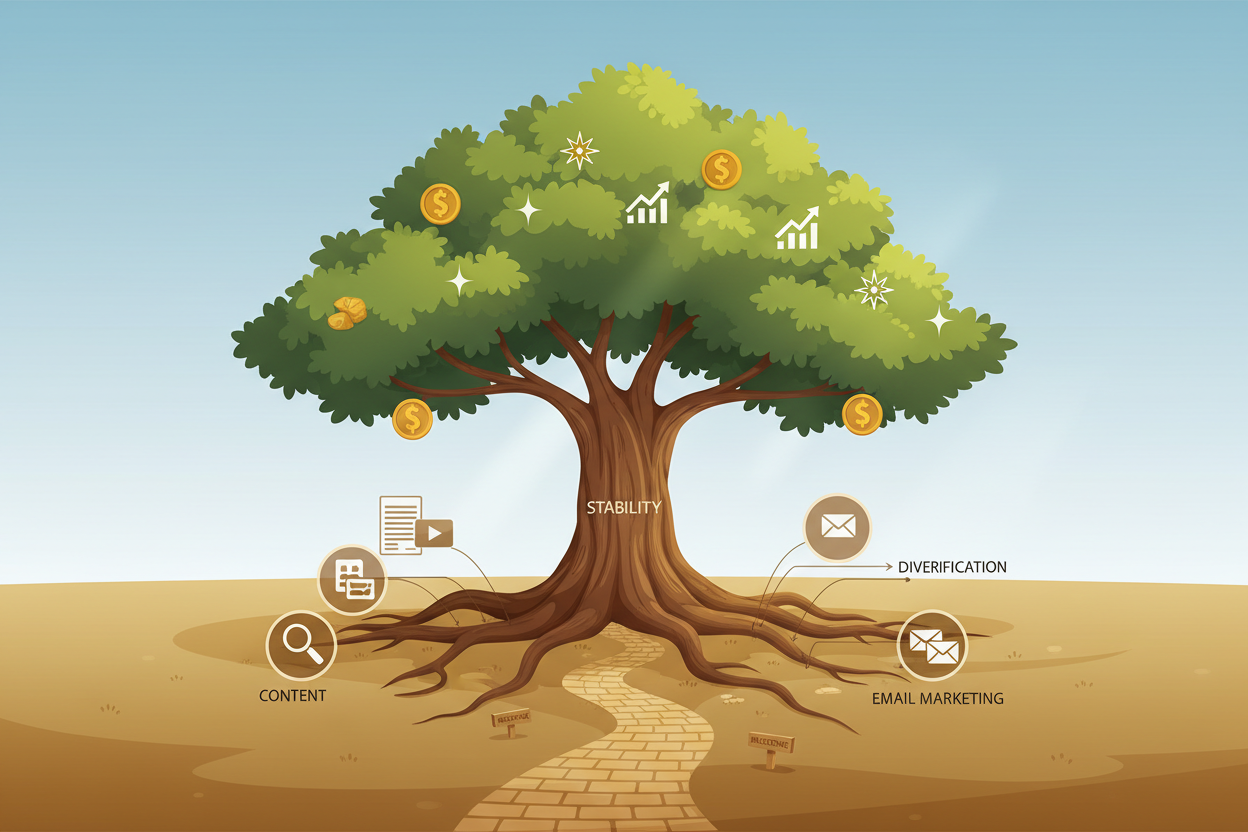
Content marketing isn’t just a buzzword – it’s the backbone of sustainable affiliate income. When you consistently create valuable, helpful content, you position yourself as an authority in your niche. People don’t buy from strangers; they buy from experts they trust.
Start by identifying your niche’s biggest pain points. What keeps your target audience up at night? What problems are they desperately trying to solve? Your content should address these issues head-on, providing genuine solutions whether or not they lead to immediate affiliate sales.
I remember when I first started focusing on solving problems rather than pushing products. My conversion rates didn’t just improve – they skyrocketed. People began sharing my content, linking to it, and most importantly, trusting my recommendations. This trust becomes your most valuable asset in long-term affiliate marketing.
Consistency is crucial here. Publishing one amazing piece of content won’t cut it. You need to show up regularly, whether that’s daily, weekly, or bi-weekly. Your audience needs to know they can count on you for fresh, valuable insights.
Diversifying Your Affiliate Portfolio 🎯
One of the biggest mistakes I see new affiliate marketers make is putting all their eggs in one basket. They find one product that converts well and focus exclusively on promoting it. While this might work short-term, it’s a recipe for disaster in the long run.
Smart affiliate marketers diversify across multiple dimensions. First, promote products from different companies within your niche. This protects you if one company changes their affiliate program terms or goes out of business entirely. Second, consider promoting products at different price points to capture various segments of your audience.
Think about it this way: not everyone in your audience has the same budget or needs. Some might be looking for budget-friendly solutions, while others are ready to invest in premium options. By offering a range of choices, you maximize your earning potential while better serving your audience.
I also recommend exploring different types of affiliate programs. Mix recurring commission programs with one-time payment offers. Recurring commissions provide predictable monthly income, while high-ticket one-time commissions can provide significant income boosts.
Creating Evergreen Content That Converts 🌲
Evergreen content is your secret weapon for long-term affiliate success. Unlike trending topics that lose relevance quickly, evergreen content remains valuable and searchable for years. This means you create it once and it continues generating traffic and commissions long after publication.
Focus on creating comprehensive guides, tutorials, and comparison articles that address timeless problems in your niche. For example, if you’re in the fitness niche, an article about “Essential Home Gym Equipment for Beginners” will be relevant for years to come.
The key to successful evergreen content is depth and quality. Don’t just scratch the surface – dive deep into topics and provide more value than anyone else in your space. When someone searches for information in your niche, your content should be so comprehensive that they don’t need to look anywhere else.
Remember to update your evergreen content periodically. While the core information might remain relevant, affiliate links, prices, and specific product recommendations may need refreshing to maintain accuracy and effectiveness.
Developing Multiple Traffic Sources 🚦
Relying on a single traffic source is like building a house on quicksand – it might work for a while, but eventually, things will shift. Successful long-term affiliate marketers cultivate multiple traffic sources to ensure steady visitor flow regardless of algorithm changes or platform issues.
Organic search traffic should be your foundation. It’s free, highly targeted, and tends to convert well because people are actively searching for solutions. But don’t stop there. Social media platforms, email marketing, paid advertising, and even offline networking can all contribute to your traffic mix.
I learned this lesson the hard way when Facebook changed their algorithm and my traffic dropped by 70% overnight. That experience taught me never to depend too heavily on any single platform. Now, I maintain active presences across multiple channels, ensuring that no single change can devastate my business.
Start with one or two traffic sources and master them before expanding. Quality trumps quantity every time. It’s better to have strong presences on two platforms than weak presences on ten.
Building an Email List for Sustained Growth 📧
If content marketing is the backbone of affiliate success, email marketing is the nervous system that connects everything together. Your email list is the only traffic source you truly own and control, making it invaluable for long-term success.
Building an email list allows you to nurture relationships with your audience over time. Not everyone who visits your site is ready to buy immediately, but through consistent, valuable email communication, you can guide them toward making purchasing decisions when they’re ready.
The key to successful email list building is offering something genuinely valuable in exchange for email addresses. This could be a comprehensive guide, exclusive tips, a useful tool, or access to a private community. Whatever you offer, make sure it’s something your target audience genuinely wants.
Once people join your list, focus on providing value rather than constantly selling. The general rule I follow is 80% valuable content and 20% promotional content. This ratio keeps subscribers engaged while still generating affiliate income.
Leveraging SEO for Long-Term Organic Traffic 🔍
Search Engine Optimization (SEO) is perhaps the most powerful long-term strategy for affiliate marketers. When done correctly, SEO can provide consistent, targeted traffic for years with minimal ongoing effort.
Start with keyword research to understand what your target audience is searching for. Look for keywords with decent search volume but manageable competition. Long-tail keywords are often goldmines for affiliate marketers because they indicate high purchase intent.
On-page SEO involves optimizing your content for both search engines and users. This includes using target keywords naturally throughout your content, optimizing title tags and meta descriptions, and ensuring fast page loading speeds. But remember, user experience always comes first – never sacrifice readability for keyword density.
Link building remains crucial for SEO success. Focus on earning high-quality backlinks through creating exceptional content, guest posting on relevant sites, and building relationships with other content creators in your niche. Quality always beats quantity when it comes to backlinks.
Scaling Your Affiliate Business 📈
Once you’ve established a solid foundation, it’s time to think about scaling. Scaling doesn’t just mean working harder – it means working smarter and leveraging systems to multiply your efforts.
Consider outsourcing content creation, social media management, or technical tasks that don’t require your personal expertise. This frees up your time to focus on strategy and relationship building, which are often the highest-value activities in affiliate marketing.
Automation tools can also help you scale efficiently. Email autoresponders, social media scheduling tools, and analytics platforms can handle routine tasks while you focus on growth activities.
Another scaling strategy is expanding into related niches or creating multiple revenue streams within your existing niche. If you’ve built authority in one area, you can often leverage that credibility to succeed in adjacent markets.
Common Pitfalls to Avoid ⚠️
Even with the best strategies, there are common mistakes that can derail your long-term success. First, avoid the temptation to promote every new product that launches. Stick to products you genuinely believe in and that align with your audience’s needs.
Don’t neglect disclosure requirements. Always clearly disclose your affiliate relationships to maintain trust and comply with legal requirements. Transparency builds trust, which is essential for long-term success.
Avoid the “set it and forget it” mentality. While the goal is to build passive income streams, successful affiliate marketing still requires ongoing attention, optimization, and adaptation to market changes.
Finally, don’t ignore your analytics. Regularly review your performance data to understand what’s working and what isn’t. This data-driven approach allows you to double down on successful strategies while eliminating ineffective ones.
Building long-term income through affiliate marketing isn’t about finding shortcuts or get-rich-quick schemes. It’s about consistently providing value, building trust with your audience, and creating systems that generate sustainable revenue over time.
The strategies we’ve discussed – from content marketing and SEO to email list building and diversification – work together to create a robust affiliate business that can weather market changes and continue growing year after year. Remember, success in affiliate marketing is a marathon, not a sprint. Focus on building something valuable and sustainable, and the financial rewards will follow.
Start implementing these strategies today, but be patient with the results. Long-term success takes time to build, but once you’ve established these foundations, you’ll have created something truly valuable – a business that generates income while you sleep, travel, or pursue other interests. That’s the real power of strategic, long-term affiliate marketing. 🚀
Frequently Asked Questions 🤔
How long does it take to see results from long-term affiliate marketing strategies?
Most successful affiliate marketers see initial results within 3-6 months, but significant income typically develops over 12-18 months. The key is consistency and patience – compound growth takes time but creates lasting results.
What’s the minimum budget needed to start a long-term affiliate marketing business?
You can start with as little as $100-200 for basic tools like hosting and email marketing software. However, having $500-1000 allows for better tools, paid advertising testing, and faster growth.
Should I focus on high-ticket or low-ticket affiliate products?
A balanced approach works best. High-ticket items provide larger commissions but typically have longer sales cycles, while low-ticket items convert more easily but require higher volume. Diversifying across price points maximizes your earning potential.
How important is it to have a website for affiliate marketing success?
While social media can generate affiliate income, having your own website is crucial for long-term success. It provides a platform you control completely and serves as the foundation for SEO, email list building, and establishing authority.
What’s the biggest mistake new affiliate marketers make?
The biggest mistake is focusing on quick profits rather than building relationships and providing value. Successful long-term affiliate marketing is about solving problems for your audience, not just pushing products for commissions.
Our number 1 got to
Hit the button to check ot our number 1 go to affiliate program