
Affiliate Income: Understand the Work, Costs and Payment Conditions
Table of Contents
- What Is Affiliate Marketing and How Does It Work?
- Getting Started: Your First Steps Into Affiliate Marketing
- Choosing Programs and Understanding Payment Terms
- Building Your Platform: Website Blog or Social Media
- Content Creation Strategies That Convert
- Common Mistakes to Avoid as a Beginner
- Maintaining and Growing Your Affiliate Activity
- Conclusion: Your Path to Affiliate Marketing Success
- Frequently Asked Questions FAQs
Have you ever dreamed of making money while you sleep? 😴 I know it sounds too good to be true, but affiliate marketing has made this dream a reality for thousands of people worldwide. When I first stumbled upon affiliate marketing three years ago, I was skeptical. Could I really earn passive income by simply recommending products I already loved?
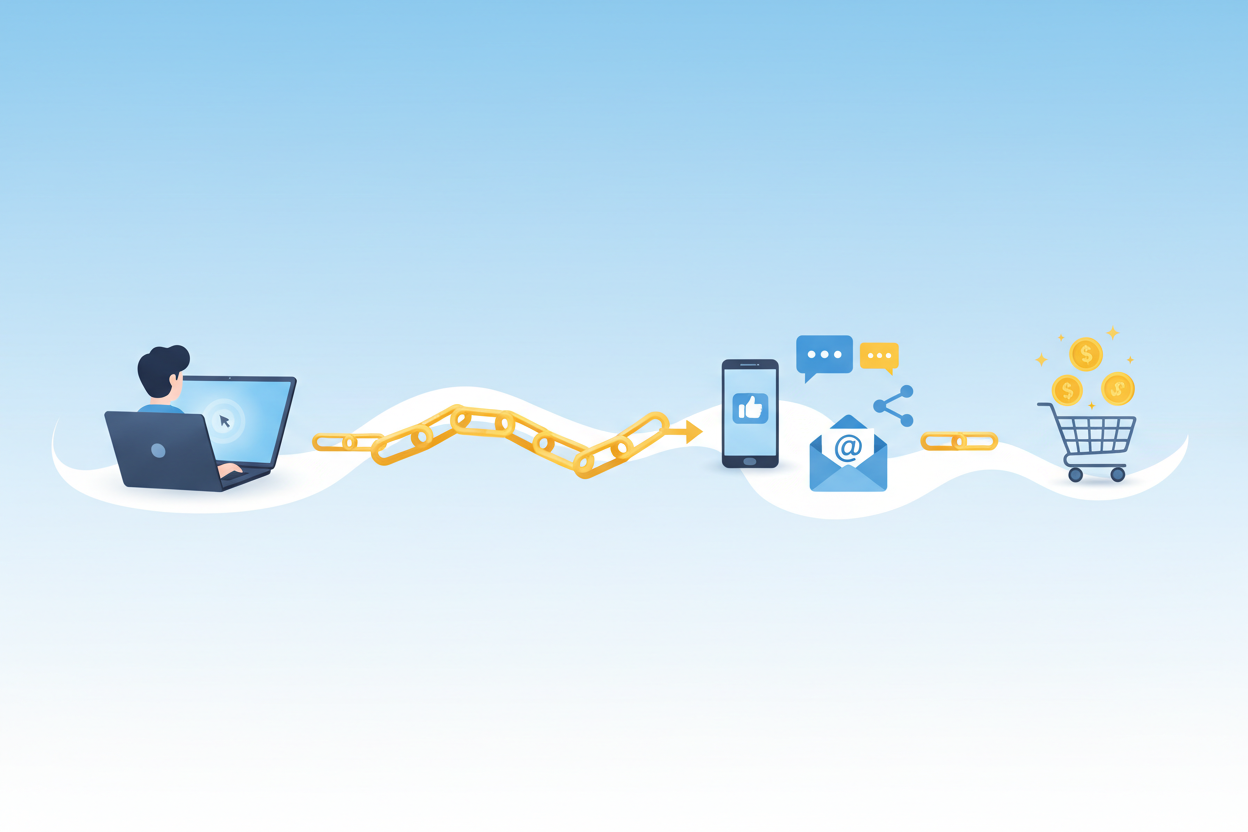
Fast forward to today, and affiliate marketing has become my primary source of passive income, generating consistent monthly revenue that continues to grow. The best part? Once you set up your systems correctly, the income truly becomes passive – meaning you earn money even when you’re not actively working.
What passive means here: a referral may earn commission when you are away from the keyboard. It still takes work to attract readers, keep recommendations accurate, check links and terms, maintain the site and review payments. No setup guarantees continuing sales, profit or freedom from maintenance. Personal results above are not a forecast for a new affiliate.
This guide explains the business model, the work it requires and how to budget for a small test. Begin with one audience, one approved channel and an offer you can evaluate honestly. The aim is to understand whether the activity is worth continuing without assuming that income will arrive on a particular schedule.
What Is Affiliate Marketing and How Does It Work? 🔍
Affiliate marketing is a referral arrangement: a merchant or network pays you when your promotion leads to an eligible action under its program terms. The action might be an approved purchase or another specified event. A visitor clicking a link is not automatically a payable referral.
You apply to a program, check its terms and, if approved, use its tracking links in permitted channels. The program attributes and reviews eligible actions before paying under its schedule. Refunds, cancellations, exclusions or attribution rules can affect payment. The merchant usually handles product fulfilment; you still handle the accuracy, disclosure and upkeep of your promotion.
The main participants are the merchant, the affiliate, the customer and, sometimes, a network that supplies tracking and administration. Their interests are not automatically identical. Recommend a product only when the evidence and the reader’s needs justify it, including when a cheaper or non-affiliate option is a better fit.
An existing article or video can continue helping readers after publication, so each referral does not necessarily require a new piece of content. Continued earnings still depend on relevant traffic, a suitable offer, credited referrals and an active agreement. Budget for updating the material rather than treating it as a permanent income-producing asset.
Illustrative one-month calculation: These invented inputs are arithmetic only, not typical results, a target or a forecast. Assume 1,000 page visits, 100 outbound affiliate clicks and 2 approved sales, each earning US$25. That is US$50 in gross commission. If cash operating costs are US$30, US$20 remains before tax and the value of your work. With zero approved sales and the same costs, the cash loss is US$30. Payment may arrive later under the program’s payout schedule; no future recurring commissions are included.
Getting Started: Your First Steps Into Affiliate Marketing 🚀
Starting your affiliate marketing journey doesn’t require a massive investment or technical expertise, but it does require strategic planning. The first step is choosing your niche – the specific market or topic you’ll focus on. I recommend selecting a niche you’re genuinely passionate about because authenticity resonates with audiences and makes content creation much easier.
Choose a reader problem you understand, then check whether you can create useful evidence and join a suitable program. A broad category such as health, finance or technology is not proof of demand or profit. Our low-competition niche research guide can help you narrow the audience and inspect the existing competition before spending.
Once you’ve chosen your niche, research your target audience thoroughly. Understanding their pain points, desires, and shopping behaviors will help you create content that truly serves them. I spend considerable time in Facebook groups, Reddit communities, and comment sections to understand what my audience is struggling with.
Next, you’ll need to choose your primary platform for reaching your audience. This could be a blog, YouTube channel, Instagram account, TikTok profile, or email newsletter. While it’s tempting to be everywhere at once, I recommend starting with one platform and mastering it before expanding to others.
Choosing Programs and Understanding Payment Terms 💡
For each program, record eligible countries, allowed channels, the action that earns commission, attribution rules, payout thresholds and timing. Also check cancellations, returns, commission duration and termination terms. Product quality and audience fit matter alongside the published payout.
Amazon Associates terms vary by country and qualifying category or action. As checked on 9 October 2026, the Amazon.com US standard commission schedule includes 3% for Furniture and 0% for Gift Cards; it also lists separate bounty events. These are US examples, not worldwide rates or expected earnings. Check the current schedule for the country program and products you plan to promote.
High-ticket affiliate programs in industries like software, online courses, and financial services often offer much higher commissions – sometimes $100-$1000+ per sale. These require more targeted content and longer sales cycles, but the payoff can be substantial. I’ve had single sales generate more commission than dozens of lower-priced product sales combined.
The figures and personal comparison above should not be used as a typical payout or expected result. Check the actual eligible product, qualifying action and approval terms. A larger possible commission may still produce no income, and regulated financial products need separate care over suitability, risk and permitted promotion.
Recurring commission has a defined scope. For example, HubSpot’s public affiliate page, checked on 9 October 2026, advertises 30% recurring commission for up to one year. An active customer subscription does not extend that stated cap. Review its program policies and your approved offer for eligibility and exclusions. Our SaaS program comparison guide explains why one-off, limited recurring and longer-running arrangements need different forecasts.
Use a product yourself where practical and record what you actually checked. Distinguish hands-on observations from manufacturer claims or other research, and say when you have not tested something. Do not imply that authentic presentation guarantees conversions.
Building Your Platform: Website, Blog, or Social Media 🏗️
A website can give you more control over layout and published content, while social and video platforms offer different ways to reach readers. None gives complete independence: hosting, search visibility, platform rules and affiliate agreements can change. Start with a channel the program allows and that you can maintain.
For a website, price the domain, hosting renewal, backups and any paid themes, plugins or email tools before committing. Introductory hosting prices may require advance payment and may differ from renewal prices. Choose a manageable setup that works on mobile and leaves room in your budget for maintenance.
An About page, contact details and a clear explanation of relevant commercial relationships can help readers understand the site. Legal requirements depend on jurisdiction, data use and the promotion itself. For example, where UK GDPR applies, the UK ICO’s privacy-information guidance explains what people must be told about personal-data use; the ICO flags that guidance for review following legislative changes. A generic Privacy Policy or Disclaimer does not establish compliance. This is general information, not legal advice; obtain qualified advice for your own circumstances.
If you prefer video content, YouTube can be an incredibly powerful platform for affiliate marketing. Product reviews, tutorials, and comparison videos tend to perform well. The key is providing genuine value while naturally incorporating your affiliate recommendations.
Social media platforms like Instagram, TikTok, and Pinterest can complement your main platform beautifully. Use them to drive traffic back to your website or to promote specific products directly. Remember that each platform has its own culture and content style, so adapt your approach accordingly.
Content Creation Strategies That Convert 📝
Useful content answers a buying question with evidence, limitations and realistic alternatives. A commercial relationship should remain clear even when the recommendation appears naturally within a tutorial or review. Help readers make an informed choice rather than concealing the promotional element.
Product reviews are the bread and butter of affiliate marketing, but they need to be comprehensive and honest. Include both pros and cons, compare alternatives, and share your personal experience. I’ve found that addressing potential objections upfront actually increases trust and conversion rates.
A tutorial can show how a product works while solving a specific problem. Include the relevant steps, limitations and alternatives, and disclose a commercial relationship where it applies. Whether that format converts better than another is something to test with your own audience.
Comparison posts and roundups can help readers who are evaluating options. State the selection criteria, who each option suits and the evidence behind the recommendation. Do not include a product simply because it has a high payout.
Use personal anecdotes only when they are true and relevant. If you have not used a product, describe the research and limitations instead of implying first-hand results. A story should not replace evidence for performance or income claims.
Optimize all your content for search engines by researching relevant keywords and incorporating them naturally. Tools like Google Keyword Planner, Ubersuggest, or SEMrush can help you find keywords your target audience is searching for.
Common Mistakes to Avoid as a Beginner ⚠️
Learning from others’ mistakes can save you months of frustration and lost income. One of the biggest mistakes I see beginners make is promoting too many products without focus. It’s better to become known as the go-to expert for specific products in your niche than to be a generalist promoting everything.
Another common pitfall is prioritizing commissions over audience value. While it’s tempting to promote high-commission products exclusively, your audience will notice if you’re not genuinely recommending the best solutions for their needs. Trust, once broken, is incredibly difficult to rebuild.
Disclosure depends on the audience, medium and applicable law. For US endorsements, the FTC’s affiliate guidance says the commercial relationship should be clear and conspicuous and close to the recommendation. Readers should understand that you can earn commission. A notice on a separate page may be missed; placement and wording need to work in the actual post, video or other format. The sample sentence in a guide cannot guarantee compliance everywhere. Also check the program’s own disclosure requirements.
There is no reliable universal timetable for significant income. Set a spending cap, a workload you can sustain and a review point suited to the program’s attribution and payment cycle. Low early returns do not prove that a breakthrough is just around the corner. Continue only when the evidence and cost justify it.
Track the stages separately. GA4 enhanced measurement can record outbound-link clicks when configured, but those clicks do not prove a merchant sale. Use affiliate reports for pending, rejected and approved commissions, and compare actual payments with expenses. Note any attribution gaps before drawing conclusions.
Maintaining and Growing Your Affiliate Activity 📈
Before expanding, check whether the activity covers its costs and is worth the time it takes. More content, products or channels create more work to maintain. A useful starting routine is the illustrative checklist below; adjust its frequency to the pace of product and program changes.
- Links and offers: check destinations, product availability, country eligibility, pricing and commission terms.
- Content: update material feature changes, limitations and recommendations; keep the basis for personal-experience claims.
- Site and audience: maintain software, backups and security, and address reader questions or broken journeys.
- Disclosures and data: review how your actual channels explain commercial relationships and handle personal data.
- Economics: reconcile approved commissions and cash receipts, reversals, tool costs and time spent before increasing the budget.
Repurpose a useful piece of content only when it fits the new format and its audience. Update the evidence, links and disclosures rather than copying blindly. Measure whether the extra reach is worth the production and maintenance time.
Email can provide a direct route to interested readers, but it still depends on permission where required, deliverability and provider rules. Check that your email service permits the way you plan to use affiliate promotions. Our email-tool policy and pricing guide helps you compare those constraints before adding another recurring cost.
If you later create your own digital products, budget separately for development, delivery, support and refund handling. Selling your own product changes the work and responsibilities involved; evaluate it as a separate business decision rather than assuming it will raise revenue per visitor.
Outsource only when you can afford the cost and review the work. You still need to check factual claims, product evidence, disclosures and permissions. Compare the time saved with the expense and any additional review or coordination it creates.
Diversification may reduce dependence on one merchant or traffic source, but it adds work and cannot eliminate income risk. Add a program or channel when it serves the same audience well and you can maintain it within the available time and budget.
Conclusion: Your Path to Affiliate Marketing Success 🎯
Affiliate marketing truly offers one of the most accessible paths to generating passive income, but success requires patience, consistency, and a genuine desire to help your audience. The strategies I’ve shared in this guide have helped me and countless others build sustainable affiliate marketing businesses.
Start with one niche, one permitted platform and a small number of offers you can evaluate well. Useful content is worth creating, but it does not ensure commissions. Review the actual evidence, expenses and workload before deciding to invest more.
The most successful affiliate marketers I know share one common trait: they view themselves as problem-solvers first and marketers second. When you approach affiliate marketing with this mindset, you’ll naturally create content that serves your audience while building a profitable business.
Your next step can be a modest test: verify one program’s terms, prepare one useful piece of content and decide how to measure the result. Keep the cost affordable, record what you learn and be willing to stop or change direction if the economics do not work.
Frequently Asked Questions (FAQs) ❓
How much money can I realistically make with affiliate marketing?
This guide does not provide a representative earnings dataset from which to predict your income. You may earn nothing or lose money after expenses. Use the illustrative calculation above to understand the arithmetic, then replace every input with your own observed results and costs.
Do I need a website to start affiliate marketing?
It depends on the affiliate program and channel it approves. Some offers can be promoted through social or video content; others require a qualifying website. A website can be useful, but it brings hosting, upkeep and other costs and does not guarantee approval or results.
How long does it take to see results from affiliate marketing?
There is no substantiated universal deadline for a first commission or profit. Your first useful milestones are approval, accurate content, eligible referral traffic and reliable reporting. Review results against costs over a period that fits the program’s sales and reporting cycle rather than relying on a standard month range.
What’s the difference between affiliate marketing and MLM?
A conventional affiliate arrangement pays for eligible referrals under a program agreement. Multi-level marketing adds a participant network with downlines, as described in the US FTC’s MLM guidance. Read the actual compensation structure and required costs. Calling an offer affiliate marketing or MLM does not by itself establish its legality, sustainability or likely returns.
Can I do affiliate marketing without showing my face or using my real name?
You can create useful written or screen-recorded content without showing your face. A public brand or pen name does not remove a program’s identity, tax or payment-information requirements, and you should not invent credentials or personal experience. Check the actual provider’s requirements before applying.
Our number 1 got to
Hit the button to check ot our number 1 go to affiliate program